Menu
open menu
close menu


- Products
- Self-Storage
- Commercial/Industrial
- Nokē™ Smart Entry
- Resources
- Blog/News
- Investors
- About Us




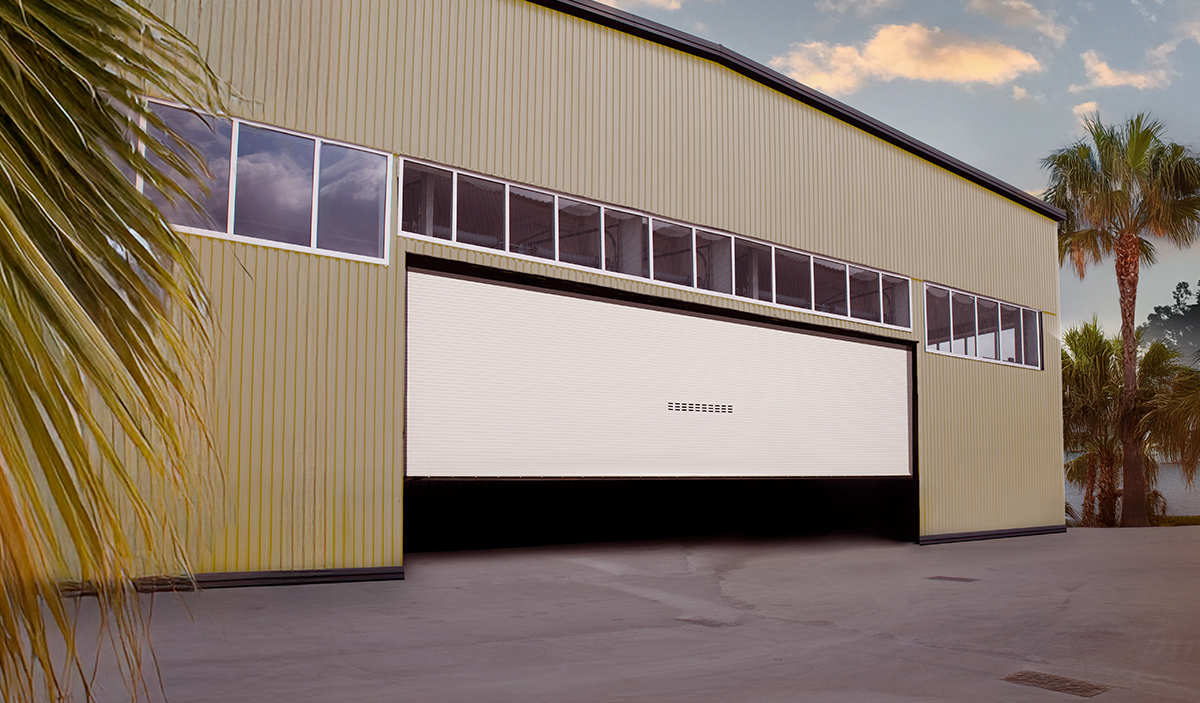
For commercial door dealers, installers, architects, and specifiers, insulated rolling steel doors play a critical role in building performance, especially as energy codes evolve and facilities face more extreme weather swings. Whether the priority is temperature control, operational efficiency, or compliance, understanding how insulated doors work (and when to specify them) is essential for successful project outcomes.
This guide breaks down the key considerations for insulated rolling steel doors, explains how insulation impacts thermal performance, and clarifies what metrics—like R-Value and U-Factor—really mean in practice.
An insulated rolling steel door is built with interlocking metal slats that contain a thermal insulating core. The insulation is paired with perimeter seals and endlocks designed to reduce air infiltration and limit heat transfer across the building envelope.
Compared to non-insulated rolling steel doors, insulated versions are engineered for facilities that require:
Because they combine durability with thermal performance, insulated rolling steel doors are increasingly used in both exterior and interior applications.
Insulated rolling steel doors are selected for environments that require temperature control, durability, or protection from weather and airflow. Common applications include:
In these spaces, insulated rolling steel doors help stabilize temperatures, reduce energy loss, protect sensitive products, and maintain efficient facility operations.
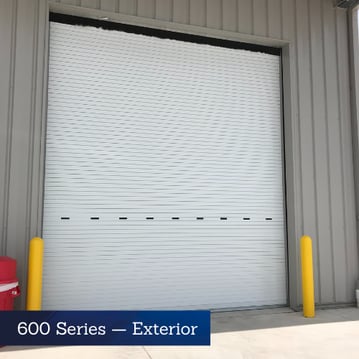
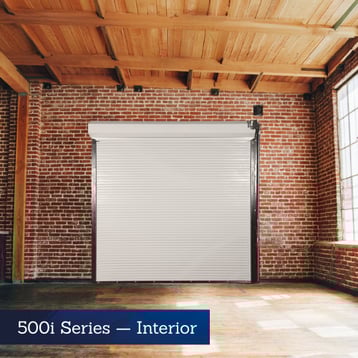
When specifying insulated rolling steel doors, the choice of core insulation makes a big difference in thermal performance, fire safety, and long-term durability. Common insulation types across the industry include polystyrene (laid-in-place or L-I-P), polyurethane foam (foamed-in-place or F-I-P), and mineral wool. Let's look at how they stack up:
Polystyrene (L-I-P) — Entry-Level Insulation (Less Common for High Performance Doors)
Polyurethane (F-I-P) — The Janus Preferred Option for Thermal Performance
Mineral Wool — Preferred Where Fire Rating or Life-Safety is Required
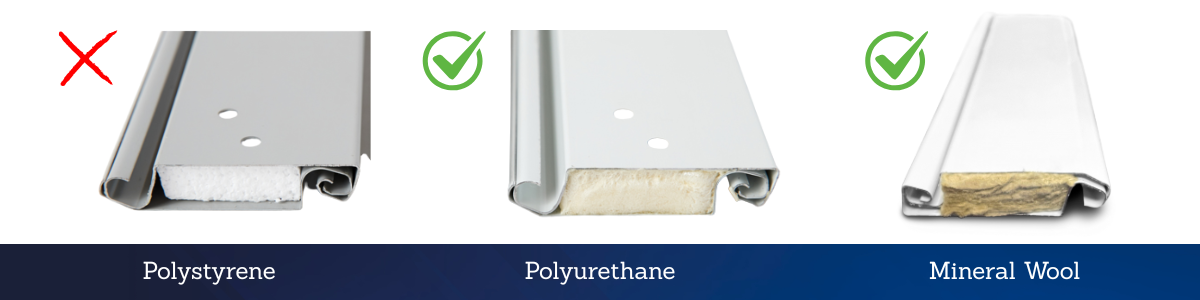
When evaluating the thermal performance of insulated rolling steel doors, two concepts often come up: R-Value and U-Factor. These terms are related, but they measure different aspects of thermal behavior, and understanding both helps ensure a door performs as expected in real-world conditions.
 R-Value: Insulation's Resistance to Heat Flow
R-Value describes how well the insulation material inside the door resists heat transfer. In rolling steel doors, this value is determined primarily by the insulation type and thickness within each slat.
Higher R-Value means:
Because polyurethane delivers higher thermal resistance than polystyrene for the same thickness, it naturally supports better R-values in insulated rolling steel doors.
 U-Factor: Thermal Performance of the Entire Door Assembly
Where R-Value looks at only the insulation, U-Factor represents the total thermal performance of the entire door assembly, including slats, joints, endlocks, and perimeter seals.
In general terms:
This is why architects and energy code professionals often reference U-Factor: it reflects how the entire system performs when installed, not just the insulation material alone.
For a deeper dive into R-Value, see DASMA Technical Data Sheet #163. It explains how R-Value is calculated for individual door sections and why U-Factor—measured on the fully installed door—provides a view of real-world thermal performance.
Bottom Line: A strong R-Value, supported by high-performance insulation like polyurethane or mineral wool, contributes meaningfully to improved thermal performance and can help facility owners minimize energy loss through door opening.
Beyond energy savings, insulated rolling steel doors can upgrade performance and provide you with a long-term financial advantage. In fact, they can even help eligible facilities qualify for federal tax incentives, including the 179D Energy Efficient Commercial Buildings Deduction. This incentive applies to qualified upgrades to the building envelope—doors included—when they improve overall energy performance. While eligibility depends on the project, building age, and energy modeling, insulated rolling steel doors can contribute to:
Insulated rolling steel doors aren’t just a product—they’re a solution to real challenges: energy efficiency, compliance, and durability. If you’ve been weighing whether your project needs insulation, this is your answer. Download our comprehensive Rolling Steel Door Catalog to learn more about Janus insulated door solutions.

.png)