Menu
open menu
close menu


- Products
- Self-Storage
- Commercial/Industrial
- Nokē™ Smart Entry
- Resources
- Blog/News
- Investors
- About Us




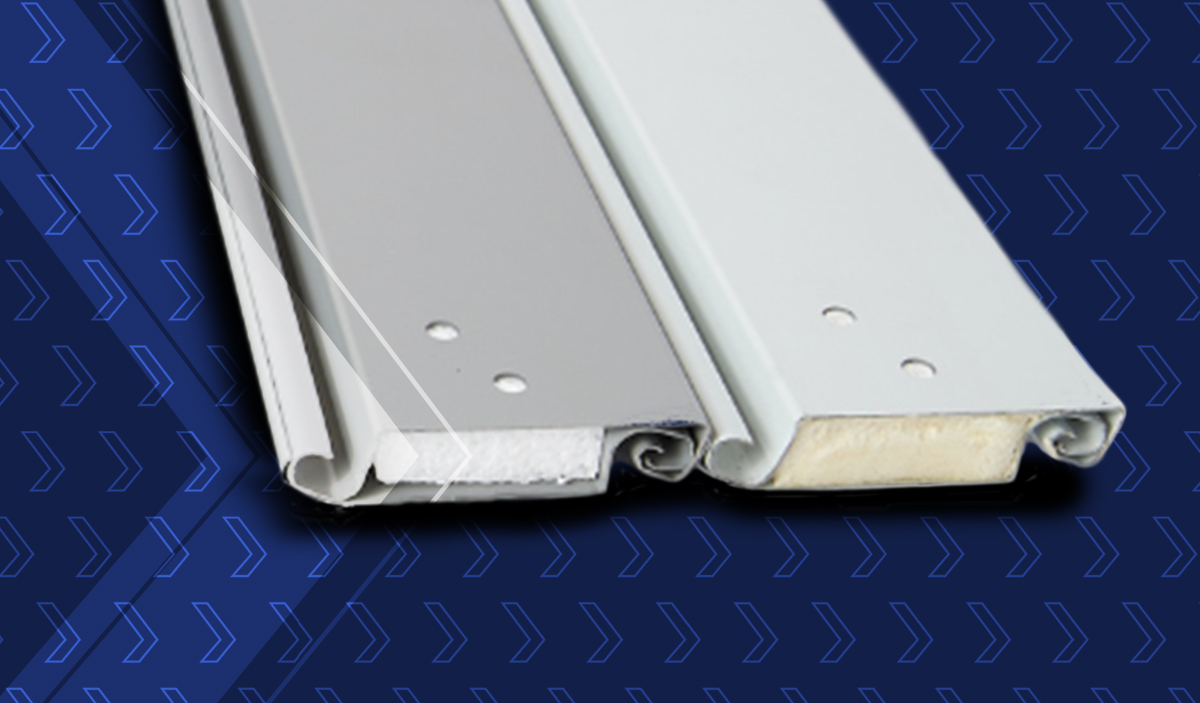
Insulated rolling steel doors aren’t just a nice to have—they’re one of the biggest levers you have for controlling energy spend, protecting product and keeping people comfortable. When the largest opening in your building envelope is underperforming, you feel it every month on your utility bill.
Insulated rolling steel doors turn your biggest opening from a constant energy leak into a controlled barrier. A properly insulated, well‑sealed rolling steel door reduces heat transfer, cuts HVAC run time, stabilizes interior temperatures and minimizes outside noise—directly impacting operating costs, employee comfort and product protection in every shift.
Look at the door the way your utility company does: as square footage of exposed surface. A single 12' x 14' opening is 168 square feet. If that surface is basically a metal radiator, your HVAC system is fighting it all day. In field comparisons, upgrading from an uninsulated curtain to a modern insulated door with perimeter seals has cut energy loss at the opening by double‑digit percentages.
For facilities running coolers, freezers or sensitive inventory, the stakes are higher. Even a 2–3°F swing at the door line can show up as spoilage risk or condensation issues. When you operate forklifts through that opening dozens or hundreds of times per day, insulation is one of the few tools you have to keep conditions stable without oversizing equipment.
When you compare insulation types for rolling doors, polyurethane foam-in-place consistently delivers the best performance per inch. Polyurethane insulation is sprayed into each slat and expands to fill the cavity, eliminating air pockets and creating a solid, continuous thermal barrier that moves with the curtain.
Industry data shows factory‑insulated doors using polyurethane can reach thermal ratings that are superior to polystyrene board systems of the same thickness. Polystyrene typically trails polyurethane on thermal performance because they rely on cut panels inserted into the curtain rather than a fully bonded foam core.
That full contact matters. When foam fully adheres to the steel skin, you reduce internal convection, cut down on rattling and help the door resist impact better over time. From an operator’s standpoint, you see fewer damaged slats at the high‑traffic impact zone and a tighter curtain that lasts longer.
Polyurethane also supports better sound control. By filling the slat, it dampens vibration and helps push sound transmission class (STC) ratings into the low 20s and beyond—enough to noticeably reduce engine and equipment noise in adjacent work areas, as documented in commercial roll‑up installations highlighted by sources such as AA Garage Door.
You’ll still see both R‑values and U‑factors in door literature, but they don’t tell the same story. U‑factor for rolling steel doors measures the heat that passes through the entire assembled door system; R‑value typically reflects only a piece of the insulation material under ideal test conditions.
Industry groups such as DASMA have been clear: U‑factor is the more accurate way to compare assembled doors because it accounts for the steel skins, joints, internal hardware and the way the door is actually built. A lower U‑factor means less heat flow. For insulated commercial doors, a U‑factor around a 1, like we offer at Janus, is a strong indicator you’re looking at a high‑performing system.
R‑value, by contrast, is simply the inverse of U‑factor and is usually reported at the center of the panel or insulation sample. A material with an R‑16 center‑of‑panel value might only deliver the equivalent of R‑8–R‑10 once you factor in the full curtain, guides and metal‑to‑metal contact. That’s why you’ll see the industry gradually pivot away from advertising big R‑numbers toward publishing system‑level U‑factor data.
If you’re comparing quotes, ask each vendor for the tested U‑factor of the complete door assembly—not just the insulation spec. That’s the metric that will show up in your energy model.
Thermal performance is only part of the story. In a busy warehouse or production environment, the right insulated rolling door also plays a major role in noise control, condensation management and product quality. Insulated rolling steel doors for commercial buildings give you more than a warmer or cooler interior—they help create a safer, more controlled work zone.
On the acoustics side, an insulated curtain with properly detailed perimeter seals can reach STC ratings in the low‑ to mid‑20s, which is enough to knock down compressor, truck and yard noise to a more manageable level in offices or QC labs that share walls with the dock. Some factory‑insulated systems push into the high‑20s and low‑30s STC range, which many manufacturers rate as a “significant” reduction in perceived noise.
From a product protection standpoint, consistent temperatures at the door line support better outcomes for everything from food ingredients and chemicals to electronics and paper goods. Reduced thermal shock at the opening means less condensation on packaging and fixtures, fewer slippery spots and a lower risk of corrosion around the threshold.
Over a full year of operation, the combination of reduced energy waste, improved comfort and fewer quality issues is what justifies the insulation investment—not a theoretical lab number on its own.
Even the best foam system will underperform if the rest of the door is treated as an afterthought. High‑performing insulated rolling doors combine polyurethane, perimeter seals and thermal breaks so the assembly works as a single barrier instead of a patchwork of hot and cold spots.
Start with the perimeter. Header seals, top draft stops and side draft stops close the gaps around the curtain, cutting air infiltration that would otherwise bypass your insulation entirely. A header seal that projects several inches to meet the curtain, paired with side seals along the guides, can dramatically reduce daylight and air leakage at the opening.
Finally, installation and adjustment matter. A misaligned guide, overtight spring or poorly set limit can keep the curtain from seating fully, opening gaps you never intended to have. Treat the door as part of the building envelope, not just a moving part, and insist on installers who understand both the mechanical and thermal sides of the assembly.
Choosing the right insulated door isn’t about chasing the biggest number on a brochure—it’s about matching performance to how your building actually operates. Selecting insulated rolling doors starts with your climate zone, interior temperature targets, door size and daily cycle count, then works backward to the insulation package that makes financial sense.
For a conditioned warehouse in a mixed climate, a polyurethane‑insulated door with a tested U‑factor around or below 1, STC in the 20s and full perimeter seals is a solid baseline. If you’re tying into a tight energy model for a freezer, you may need to push that spec higher and look closely at every thermal bridge around the opening.
As you evaluate options, ask vendors to document:
When you can see how a specific insulated rolling steel door is performing at peer sites—not just on paper—you’re in a much stronger position to justify the investment and capture the savings over the life of the door.
If you've been weighing whether your project needs insulation, this is your answer. Download our comprehensive Rolling Steel Door Catalog to learn more about how Janus rolling steel doors can be customized with insulation to maximize opportunities for your project.